Plumosa Ferns
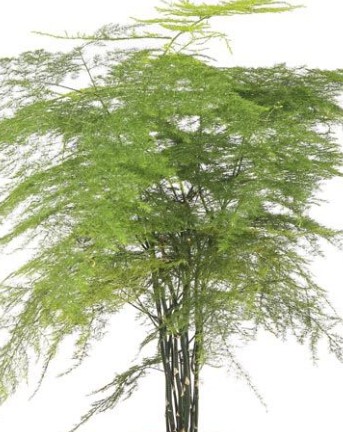
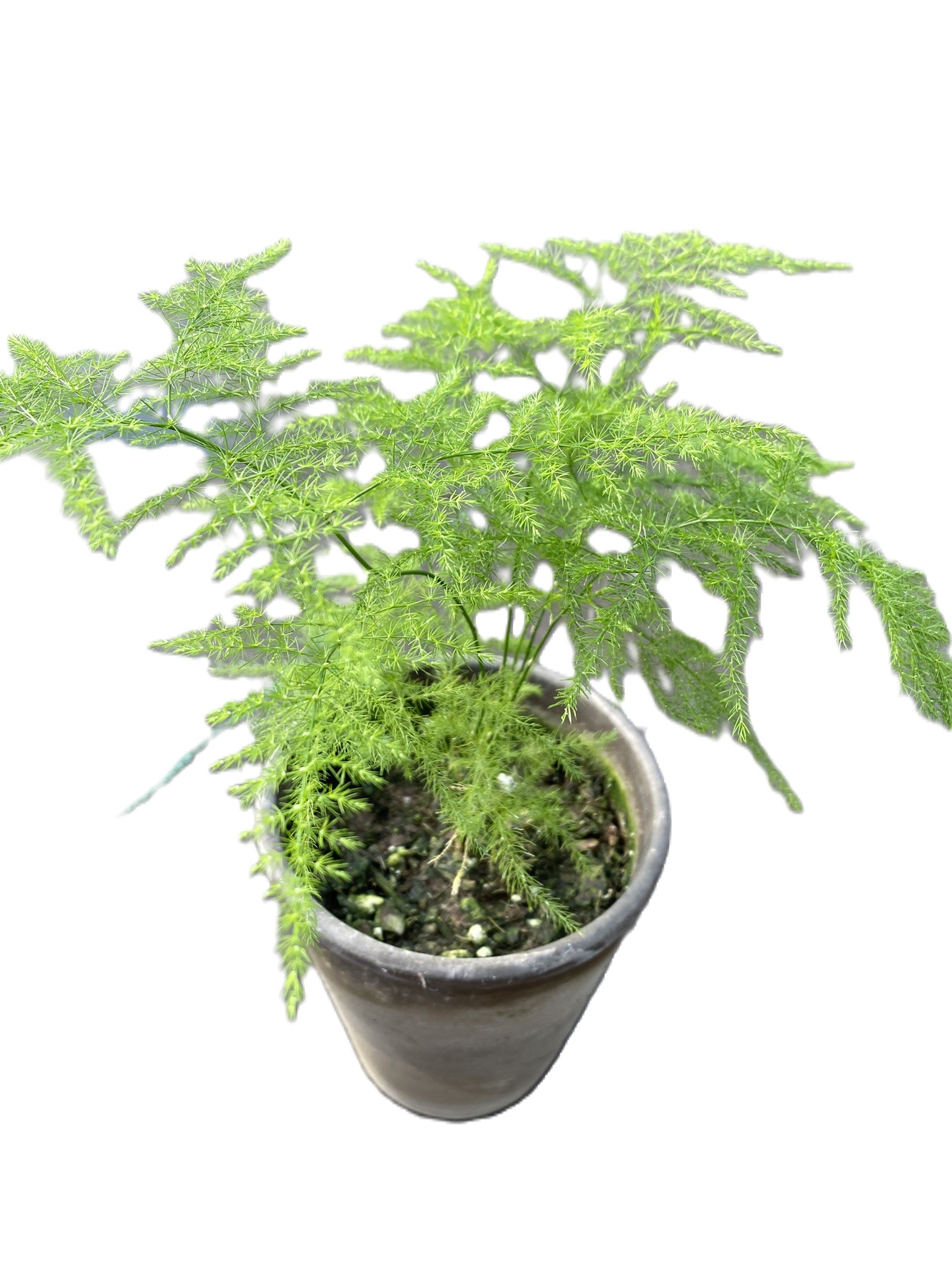
Plumosa Ferns (Asparagus setaceus, also called asparagus fern or lace fern) may look like traditional ferns, but they have different care needs because they’re not true ferns.
We typically grow Plumosa Ferns in 4″ to 6″ pots and more often use them as filler plants for various arrangements.
Common Name:
Asparagus Fern
Mature Size:
Indoors: usually 2-3 ft tall and 2-3 ft wide with long arching stems.
Outdoors (zones 9-11): can reach 10 + ft tall if allowed to climb and sprawl over support.
Growth Rate:
Fast Grower when given bright, indirect light and regular care.
Optimum Temperature:
60-75 degrees Fahrenheit (Minimum of 50 degrees Fahrenheit and Max of 80 degrees Fahrenheit)
Characteristics:
Plumosa Ferns are feathery, fern-like plants with delicate, arching stems and fine, soft foliage. Though not true ferns, they bring a lush, airy texture to indoor or outdoor spaces and can grow as a bushy houseplant or trailing climber. They are hardy in warm, humid conditions, grow relatively quickly, and produce small white flowers and red berries under optimal conditions. These plants are in the asparagus family.
Light:
Indoor: Well-lit room, bright indirect light. Can tolerate shorter periods of direct sun (unlike traditional ferns).
Water:
Indoor: Water when the top inch of soil feels slightly dry. Avoid allowing the soil to fully dry out.
Outdoor: Keep soil evening moist.
Fertalizer:
Feed monthly from spring to fall with a balanced, diluted houseplant fertilizer. Do not fertilize your plumosa fern during the winter.
Common Pests/Issues:
Watch carefully for spider mites, mealybugs, and scale insects on this plant’s foliage. Leaf drop or browning leaves may occur from low humidity or irregular watering. Sudden temperature changes can also cause leaves to yellow or drop.
Additional Notes:
Plumosa Ferns make excellent houseplants because of their delicate, feathery foliage that adds a lush, airy texture to any indoor space. They are relatively low-maintenance, adaptable to average household humidity, and can thrive in bright, indirect light. Their fast growth and ability to be grown in containers or hanging baskets make them versatile for decorating shelves, tables, or hanging displays.